AI agents are working. ROI isn't.

We’re forever having the same version of the same conversation with enterprise teams. They demo us a an agent that works – really works, saves some one two hours a day, takes a workflow that required three people coordinating – on rails. The demo’s clean. The numbers are real. And then we ask: what’s this connect to a business outcome that your CFO can see? And the room goes silent.
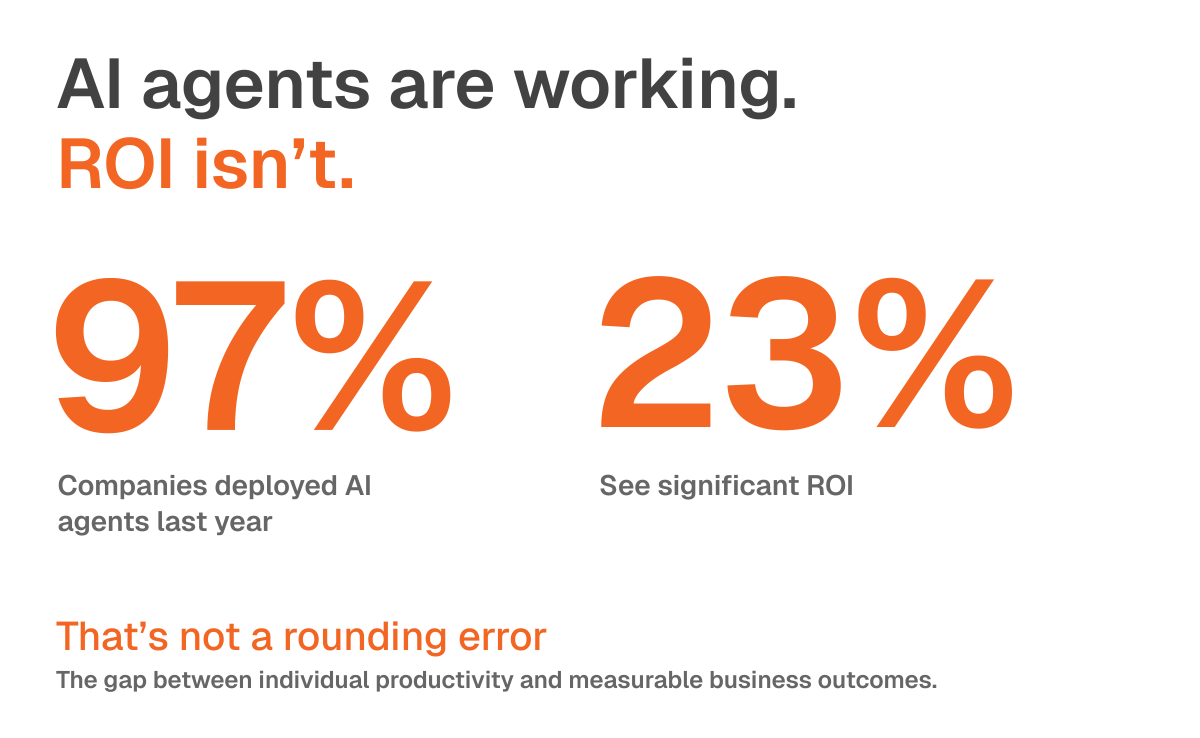
97% of companies deployed AI agents last year. Only 23% see a significant ROI. That’s not a rounding error. That’s a fundamental disconnect between what agents do at the individual level and what they enable at the organizational level.
The failure pattern is frustratingly similar for nearly everything we’ve seen. A legal team spins up an agent to help with contract review. Cuts time on review by 60%, the associate loves it. Nobody measured whether it accelerated deal velocity, reduced liability exposure, or changed headcount planning. A finance team builds an agent for reconciliation. Runs faster, has fewer errors. Nobody connected it to audit costs, or reporting lead times. The agent worked. The business case was never made.
The pitch was in 2024: agent use cases will drive productivity. It will be in 2026: agents deliver specific, measured value, based on clear business cases. Most agents currently in market were designed for the 2024 pitch and will likely never be refitted for 2026.
What separates organizations delivering ROI from the pack: they anchor AI directly to revenue, and they design platforms where business teams have autonomy while IT has control. Both require deliberate architectural decisions made on the front end, not retrofits. You can’t bolt on business value after the fact.
Gartner is forecasting more than 40% of agentic AI projects will be canceled by the end of 2027 “due to increased costs, unclear value, and lack of governance – not because the agents stopped working but because the projects could no longer be explained in terms of the value delivered to the business.”
For us at Trace, what we’re learning has big implications for how we’ll build. It turns out context engineering and workflow design are not just technical choices – they’re the point where you either build the bridge to a measurable business outcome or you create a solution that looks good in a demo but disappears in a CFO review. Most companies only realize their agents don’t have a business case six months into deploying one.